


Wow....
Source;
http://jalopnik.com/5845835/watch-a-heavily-damaged-ford-truck-remove-itself-from-hurricane-wreckage
|
|---|
|
|---|
Showing posts with label Ford. Show all posts
Showing posts with label Ford. Show all posts
Monday, October 3, 2011

Friday, September 30, 2011





Thursday, September 1, 2011
Car and Driver: Ford Evos Concept - Auto Shows
Wow....


 Good genes: Ford’s Frankfurt debutant defines a new design language for its global products.
BY STEVE SILER
At the 2005 Frankfurt auto show, Ford’s stunning Iosis concept car debuted the company’s “Kinetic” design language, which shortly thereafter debuted on non-U.S. models like the Mondeo, European Focus, C-Max, and Kuga. Our first taste of Kinetic design came more recently with the 2011 Fiesta and 2012 Focus models. But now Ford’s look is evolving, with another Frankfurt concept—the 2011 show’s gorgeous and aptly named Evos—previewing the next evolution (get it?) of Blue Oval design.
Sadly, the company won’t go so far as to adapt the Evos’s quad butterfly doors for production. But this fastback four-seater, which is shorter than a Focus sedan but wider than a Porsche Panamera, does embody a half dozen newly defined pillars of Ford global design—which will drop the Kinetic moniker. The Evos will provide the template for future Fords, and so we took a virtual tour of the car with Ford design chief J Mays, who explained those design pillars.
Ford’s New Global Design Language, Explained
The first two pillars of Ford’s new design language are “silhouette innovation” and “perceived efficiency.” The former, according to Mays, represents a profile “that defines your automobile and looks different than most of the other cars in a particular class on the road,” while the latter equates to visual lightness and sleekness. “We’d like to have lightweight pillars [and] a teardrop cabin [where] the lines on the side disappear at a vanishing point somewhere around 100 yards behind the car.” The gist? Think less ‘traditional three-box sedan’ and more ‘four-door coupe.’
“Refined surface language” refers to a smoothing out of Kinetically sculpted body surfaces, among them the architectural fenders, creased door skins, and sculpted hoods. This directive also appears to be a reaction to other manufacturers that Mays claims have “annexed” and subsequently exaggerated Ford’s Kinetic motifs. Ford is going in “exactly the opposite direction” now, he said, keeping what he called the “excitement” of Kinetic design but rendered in “beautiful shapes you’d love to run your hands over.”
An emphasis on the fourth pillar, “technical graphics,” basically refers to the lamps and lower body addenda. “Headlamps seem to be growing to absurd proportions,” said Mays. “They’ve become less about technology and more about design flourish and style. And we think that’s reached its complete evolution. So we’re going to the minimal height for the headlamps and the taillamps and we’re going to let the technology speak for the graphics rather than overt style.” The headlamps on the Evos are rendered in LEDs “designed in such a way that you probably haven’t seen before.” Will every future Ford model get “razor-cut” headlamps such as these? Yes, and Mays told us that he is committed to LED headlamps on every new Ford, although we’ll have to see if those make it past the accountants.
The final two newly defined design-isms are the “new face of Ford,” which involves pulling the trapezoid grille way up to the leading edge of the hood (it gives the Evos a sort of Mustang-esque shark nose), and a “visual sense of premium quality,” which—besides being less catchy than the others—basically means creating the sort of designs people associate with higher-end cars. “We’ve tried to eliminate one of the grilles on the vehicle, and focus on the other. And what that does is allow us to have a smaller inlet, gives us better aerodynamics, and also, I think, looks much more premium.”
If roadgoing Fords end up looking like the Evos, we say “mission accomplished” to the premium bit. Indeed, more than a few of us think that the “new face of Ford” looks a lot like the current face of Aston Martin, particularly, the slim, six-sided grille and Rapide-esque roofline. Could Ford be suffering from a case of “seller’s remorse” after getting rid of Aston Martin during the great fire sale of 2008? Mays didn’t admit any such—to borrow his own term—annexation of Aston’s designs, but when asked about the similarities, he seemed rather comfortable with the comparison.
Head in the “Cloud”
However Aston-y the Evos looks, it wouldn’t be a show car if it didn’t contain a boatload of future tech. Cloud-based connectivity supposedly helps the Evos identify and pre-arrange its various systems to match the preferences of the upcoming drive, thus promising “seamless connectivity” from home to car to office, which may or may not be a good thing. It also gauges the skills of the driver and, reconciling them with weather and road conditions, adjusts the powertrain and chassis to maintain “optimum safety”—which sounds a bit Hal 9000 to us. Then there are the “driver wellness” features, too, which include a heart-rate monitor; the car is able to use current and previous data via the cloud to monitor “the physical state and workload of the driver and adjusts the driving experience accordingly.” To the good, if you start driving aggressively, the Evos will also simplify the gauge cluster to provide only necessary info and switch the driver’s phone to “do not disturb mode.”
The Evos is powered by—what else?—the cloud. Just kidding. It features a lithium-ion-based, plug-in gas/electric powertrain that’s said to be able to deliver extended-range or parallel-hybrid propulsion, ultimately delivering the same sort of fuel economy as the Ford C-Max Energi that’s scheduled to arrive stateside next year. Ford gave no more details on the powertrain beyond this: The cloud would theoretically be heavily involved, directing the car when to make various on-the-fly powertrain adjustments, such as switching to electric mode when driving into a city center that may have emissions restrictions.
We won’t have to wait long to see the look previewed here on a saleable Ford product. The 2013 Fusion will be the first Ford to wear the new design language; we expect to see that car next January at the Detroit show. In the meantime, if you can make it to Frankfurt, check out the Evos—it’s a stunner.
Source;
http://www.caranddriver.com/news/car/11q3/ford_evos_concept-auto_shows
 Good genes: Ford’s Frankfurt debutant defines a new design language for its global products.
BY STEVE SILER
At the 2005 Frankfurt auto show, Ford’s stunning Iosis concept car debuted the company’s “Kinetic” design language, which shortly thereafter debuted on non-U.S. models like the Mondeo, European Focus, C-Max, and Kuga. Our first taste of Kinetic design came more recently with the 2011 Fiesta and 2012 Focus models. But now Ford’s look is evolving, with another Frankfurt concept—the 2011 show’s gorgeous and aptly named Evos—previewing the next evolution (get it?) of Blue Oval design.
Sadly, the company won’t go so far as to adapt the Evos’s quad butterfly doors for production. But this fastback four-seater, which is shorter than a Focus sedan but wider than a Porsche Panamera, does embody a half dozen newly defined pillars of Ford global design—which will drop the Kinetic moniker. The Evos will provide the template for future Fords, and so we took a virtual tour of the car with Ford design chief J Mays, who explained those design pillars.
Ford’s New Global Design Language, Explained
The first two pillars of Ford’s new design language are “silhouette innovation” and “perceived efficiency.” The former, according to Mays, represents a profile “that defines your automobile and looks different than most of the other cars in a particular class on the road,” while the latter equates to visual lightness and sleekness. “We’d like to have lightweight pillars [and] a teardrop cabin [where] the lines on the side disappear at a vanishing point somewhere around 100 yards behind the car.” The gist? Think less ‘traditional three-box sedan’ and more ‘four-door coupe.’
“Refined surface language” refers to a smoothing out of Kinetically sculpted body surfaces, among them the architectural fenders, creased door skins, and sculpted hoods. This directive also appears to be a reaction to other manufacturers that Mays claims have “annexed” and subsequently exaggerated Ford’s Kinetic motifs. Ford is going in “exactly the opposite direction” now, he said, keeping what he called the “excitement” of Kinetic design but rendered in “beautiful shapes you’d love to run your hands over.”
An emphasis on the fourth pillar, “technical graphics,” basically refers to the lamps and lower body addenda. “Headlamps seem to be growing to absurd proportions,” said Mays. “They’ve become less about technology and more about design flourish and style. And we think that’s reached its complete evolution. So we’re going to the minimal height for the headlamps and the taillamps and we’re going to let the technology speak for the graphics rather than overt style.” The headlamps on the Evos are rendered in LEDs “designed in such a way that you probably haven’t seen before.” Will every future Ford model get “razor-cut” headlamps such as these? Yes, and Mays told us that he is committed to LED headlamps on every new Ford, although we’ll have to see if those make it past the accountants.
The final two newly defined design-isms are the “new face of Ford,” which involves pulling the trapezoid grille way up to the leading edge of the hood (it gives the Evos a sort of Mustang-esque shark nose), and a “visual sense of premium quality,” which—besides being less catchy than the others—basically means creating the sort of designs people associate with higher-end cars. “We’ve tried to eliminate one of the grilles on the vehicle, and focus on the other. And what that does is allow us to have a smaller inlet, gives us better aerodynamics, and also, I think, looks much more premium.”
If roadgoing Fords end up looking like the Evos, we say “mission accomplished” to the premium bit. Indeed, more than a few of us think that the “new face of Ford” looks a lot like the current face of Aston Martin, particularly, the slim, six-sided grille and Rapide-esque roofline. Could Ford be suffering from a case of “seller’s remorse” after getting rid of Aston Martin during the great fire sale of 2008? Mays didn’t admit any such—to borrow his own term—annexation of Aston’s designs, but when asked about the similarities, he seemed rather comfortable with the comparison.
Head in the “Cloud”
However Aston-y the Evos looks, it wouldn’t be a show car if it didn’t contain a boatload of future tech. Cloud-based connectivity supposedly helps the Evos identify and pre-arrange its various systems to match the preferences of the upcoming drive, thus promising “seamless connectivity” from home to car to office, which may or may not be a good thing. It also gauges the skills of the driver and, reconciling them with weather and road conditions, adjusts the powertrain and chassis to maintain “optimum safety”—which sounds a bit Hal 9000 to us. Then there are the “driver wellness” features, too, which include a heart-rate monitor; the car is able to use current and previous data via the cloud to monitor “the physical state and workload of the driver and adjusts the driving experience accordingly.” To the good, if you start driving aggressively, the Evos will also simplify the gauge cluster to provide only necessary info and switch the driver’s phone to “do not disturb mode.”
The Evos is powered by—what else?—the cloud. Just kidding. It features a lithium-ion-based, plug-in gas/electric powertrain that’s said to be able to deliver extended-range or parallel-hybrid propulsion, ultimately delivering the same sort of fuel economy as the Ford C-Max Energi that’s scheduled to arrive stateside next year. Ford gave no more details on the powertrain beyond this: The cloud would theoretically be heavily involved, directing the car when to make various on-the-fly powertrain adjustments, such as switching to electric mode when driving into a city center that may have emissions restrictions.
We won’t have to wait long to see the look previewed here on a saleable Ford product. The 2013 Fusion will be the first Ford to wear the new design language; we expect to see that car next January at the Detroit show. In the meantime, if you can make it to Frankfurt, check out the Evos—it’s a stunner.
Source;
http://www.caranddriver.com/news/car/11q3/ford_evos_concept-auto_shows
Friday, July 8, 2011
Ford Australia Mad Max Interceptor Concepts
Australia Ford Mad Max Interceptor Concepts,If you were unlucky enough to find themselves in the middle of a dystopian post-apocalyptic world, where gang violence and the complete absence of truly human society was the norm, is just one of the keys to the vehicle you want: matte black Ford Falcon Coupe. Do not believe us? Apparently you are missing out on Australia's cinematic masterpiece, which is Mad Max
Read more »

Read more »
Tuesday, July 5, 2011
Designer Ciprian Cooks up Ford Cobra 'Snakehead' Concept
Wow, what a sleek design! I love the 77' Stingray rear side profile homage....


 A new Ford concept has been released courtesy of designer Andrus Ciprian, dubbed the Cobra Snakehead.
The concept draws inspriation from past and current Ford models, so it fits in with the brand’s existing line up. Yet Ciprian adds some strong lines and distinctive features that make this one outstanding car.
The exterior leaves a lasting impression. Its rear end draws parallels with the first GT40′s, and the body also boasts massive wheel arches and other bold styling elements. Ford’s latest Focus model has some influence that can be seen in the front end. On the inside of the concept, two seats are divided by an excessive center console so each person gets the feel of a cockpit of their own.
To power the Cobra Snakehead, the designer suggests that a front mounted V8 would be fitting.
We hope Ford will take this concept into consideration for future models. The exterior design elements can certainly lend themselves to mass appeal, where as the interior concept may only work for some enthusiasts.
Source;
http://www.egmcartech.com/2011/07/05/ford-cobra-snakehead-concept-by-ciprian-is-a-beautiful-dream/
A new Ford concept has been released courtesy of designer Andrus Ciprian, dubbed the Cobra Snakehead.The concept draws inspriation from past and current Ford models, so it fits in with the brand’s existing line up. Yet Ciprian adds some strong lines and distinctive features that make this one outstanding car.
The exterior leaves a lasting impression. Its rear end draws parallels with the first GT40′s, and the body also boasts massive wheel arches and other bold styling elements. Ford’s latest Focus model has some influence that can be seen in the front end. On the inside of the concept, two seats are divided by an excessive center console so each person gets the feel of a cockpit of their own.
To power the Cobra Snakehead, the designer suggests that a front mounted V8 would be fitting.
We hope Ford will take this concept into consideration for future models. The exterior design elements can certainly lend themselves to mass appeal, where as the interior concept may only work for some enthusiasts.
Source;
http://www.egmcartech.com/2011/07/05/ford-cobra-snakehead-concept-by-ciprian-is-a-beautiful-dream/
Thursday, June 9, 2011
2011 Ford Fiesta
2011 Ford Fiesta

2011 Ford Fiesta

2011 Ford Fiesta
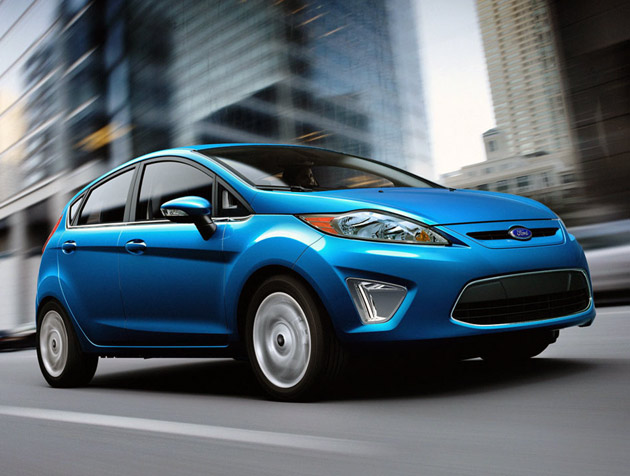
The 2011 Ford Fiesta ranks 2 out of 33 Affordable Small Cars. This ranking is based on our analysis of 25 published reviews and test drives of the Ford Fiesta, and our analysis of reliability and safety data. Reviewers are nearly unanimous in saying that the 2011 Ford Fiesta sets new benchmarks for the affordable small car class -- even reviewers who don't go that far say Honda and Toyota should watch their backs. The Fiesta debuted in 2010, and this year, the Fiesta gets even more accolades: We named it the 2011 Best Subcompact Car for the Money.
Ask any car lover and they'll tell you: some of the world's best small cars never make it stateside. With the 2011 Ford Fiesta, that's changed. On sale in Europe since 2008, the most recent iteration of the Fiesta has finally arrived at dealerships in the U.S. AutoWeek says, "The Fiesta is as good a small car as can be found, sourced from anywhere in the world. That it comes from the Blue Oval is remarkable and heartening; its brilliance is the first ray of sunshine on what has been a seemingly midnight horizon."
The Fiesta gets high marks from almost every reviewer who has driven it because it offers things many other small cars lack: a fun driving experience and a comfortable, upscale cabin. With the Fiesta, many reviewers say Ford may radically alter what American buyers expect from small cars. The Fiesta has features rarely seen among Small/Subcompact Cars, from available heated seats to Ford's SYNC system to an airbag for the driver's knees. But what will seal the deal for many buyers is the Fiesta's hybrid-like fuel economy. Ford says it should get 30 miles per gallon in the city and 40 miles per gallon on the highway. Those numbers are close to what many hybrids offer, but the Fiesta will cost thousands less. These strong characteristics led Consumer Guide to name it a “2011 Best Buy.”
However, there's always the risk that the praise may be premature. Reviewers have been enjoying well-optioned higher trims. In the base trim, which comes with few standout features, reviewers may not be so effusive.

2011 Ford Fiesta
Other Cars to Consider
If you're looking for a fun-to-drive small car, the Fiesta isn't the only option, but it is one of the least expensive. The Mazda3 wins a lot of praise for its driving dynamics, but it starts at about $2,000 more than the base Fiesta -- and can’t match the Fiesta's fuel economy, which is among the best in the class. The Mini Cooper comes close to the Fiesta's fuel economy ratings, but costs about $5,000 more than the base Fiesta. However, if you're considering a well-optioned Fiesta (higher Fiesta trims start only about $1,000 below the Mini's base price), the Mini's BMW-sourced driving dynamics may make it worth looking at.If practicality is your main concern, you should check out the Honda Fit. While reviewers flat-out say it isn't as much fun as the Fiesta, it starts at less than $1,000 more than the Fiesta and has lots more cargo room than the Fiesta hatchback. It also only trails the Fiesta's estimated fuel economy by five miles per gallon on the highway and two miles per gallon in the city.

2011 Ford Fiesta
Details: Ford Fiesta
2011 Ford Fiestas come in an array of colors, ranging from the basic Tuxedo Black and Oxford White to the quirky Lime Squeeze, Yellow Blaze and Red Candy. The Fiesta is available as a four-door sedan or five-door hatchback. Four trims are available: the base S, SE, SEL and SES. Note that the base S is available only as a sedan. Also, the sedan isn't available in the SES trim, and the hatch isn't available in the SEL, though the two trims are nearly identical in terms of the features and options they offer. The base Fiesta S is starts at $13,320, while the SES trim starts at $17,120.Though the Fiesta is a new model, check out our Ford Deals page to see if there are any discounts or incentives available.

2011 Ford Fiesta

2011 Ford Fiesta

2011 Ford Fiesta

2011 Ford Fiesta
2011 Ford Fiesta

Saturday, June 4, 2011
Mazda to leave Flat Rock plant it shares with Ford
 Detroit News staff and wires
Mazda Motor Corp. will pull out of its manufacturing venture with Ford Motor Co. and stop making cars in Michigan, a Japanese newspaper reported Friday.
Ford and Mazda both declined to comment on the report.
But Mazda has been studying whether to keep making autos at the Flat Rock plant, and senior executives have said they expect to make a decision this year.
Mazda and Ford operate the AutoAlliance International plant as a 50-50 partnership. But the plant was running at less than half of its capacity last year, as its 1,700 workers produced just 36,000 Mazda6 cars and 78,000 Ford Mustangs on a single shift.
Citing unidentified company sources, the Nikkei business daily said Mazda was considering selling its stake to Ford as part of a restructuring of its global production operations.
Mazda would ship cars to the United States from Japan and from Mexico starting around 2013, according to the Nikkei.
The Japanese automaker said in a statement Friday that it had "nothing to announce at this time.
"Today's news report … is not based on information released by Mazda. We do not comment on speculation."
Several analysts expect Mazda to announce a decision soon.
"Mazda has signaled for months that it may be ending its U.S. manufacturing presence at the Flat Rock assembly plant, and although the company still hasn't confirmed the action, it seems circumstances are pointing in that direction," said Bill Visnic, senior analyst at online research firm Edmunds.com.
"Sales in the United States for the redesigned Mazda6 built at Flat Rock are running at about one-third of expectations," he said.
This year, Mazda has sold 103,072 vehicles in America, up 5.7 percent. But sales of Mazda6 cars, battling in the cutthroat midsize sedan segment, are down 8.9 percent at 13,604.
Ford has maintained employment at Flat Rock by increasing output of its vehicles at the plant, the Nikkei said.
But the ties binding the companies have loosened. Ford, once Mazda's controlling shareholder with a 33.4 percent stake, has reduced its holding to 3.5 percent.
In the meantime, Mazda is struggling financially. In the fiscal year ended March 31, its losses widened to 60 billion yen, or $742 million, from 6.5 billion yen, or $76 million, in the previous year.
The Hiroshima-based automaker attributed the deterioration in its results to lackluster sales in Japan, the initial impact of the massive March 11 earthquake and tsunami, and the strength of the yen. Mazda exports around 80 percent of the vehicles it makes in Japan.
Source;
http://www.detnews.com/article/20110604/AUTO01/106040319/1148/AUTO01/Report--Mazda-to-leave-Flat-Rock-plant-it-shares-with-Ford
Saturday, May 28, 2011
Ford Mustang Dragster Mule
 |
| 2011 Ford Mustang Dragster Mule |
Monday, March 21, 2011
1965 Shelby Cobra 427 vs 2011 Ferrari 458 Italia in a $400,000 ¼ Mile Race Bet; Can You Guess Who Wins?

A no-nonsense, classic American muscle car from the 1960s going head to head with a high-tech, thoroughbred Italian supercar in the ultimate quarter mile race. What more could you ask to make this battle more interesting? Well, how about a $400,000 wager?
Hype....
Results....
Source;
http://carscoop.blogspot.com/2011/03/1965-shelby-cobra-427-vs-ferrari-458.html
Wednesday, February 23, 2011
Mazda May Exit From U.S. Factory Operated With Ford
 By Makiko Kitamura and Yuki Hagiwara - Feb 18, 2011
Mazda Motor Corp. may pull out from a U.S. factory it operates jointly with Ford Motor Co. after production turned unprofitable, Chief Financial Officer Kiyoshi Ozaki said.
The company will announce plans for the factory in Flat Rock, Michigan, by middle of this year, Ozaki told reporters in Tokyo today. Mazda may also consider overhauling the plant or changing the models built there, he said without elaboration.
Mazda, Japan’s second-largest auto exporter, has been hurt by the yen’s sustained rise against the U.S. dollar in recent months. The Hiroshima-based company’s U.S. sales fell 9 percent in January, as increased incentives on Toyota Motor Corp.’s Corolla compact, and demand for Hyundai Motor Co.’s Elantra sapped demand for the Mazda3, Ozaki said.
A decision by Mazda to leave the plant shared with Ford since the 1980s “wouldn’t catch Ford off guard,” said Kim Hill, an economist with the Center for Automotive Research in Ann Arbor, Michigan.
“Unlike several other Ford facilities, Flat Rock hasn’t had a major recent investment in flexibility,” Hill said. “If Mazda were to leave, Ford would probably want to look at putting something off its small-car platform in that facility.”
Marcey Evans, a Ford spokeswoman, declined to comment.
The Michigan plant needs to run at 70 percent of its full 240,000 annual capacity to make a profit, Ozaki said earlier today. Mazda aims to introduce a more fuel-efficient engine to spur demand and increase domestic production to improve economies of scale after slipping into a third-quarter loss.
Mazda will need to adjust U.S. inventory by 5,000 units through the end of March, he said.
Ford’s Stake
Mazda aims to increase domestic production 33 percent to 1.1 million units in the year ending in March 2016, compared with 827,910 units last fiscal year. The ratio of exports will also increase as demand for cars in Japan declines, he said.
Mazda’s Michigan plant produced about 54,000 units last year, Ozaki said.
Ford, the second-largest U.S. automaker, reduced its stake in Mazda to 3.5 percent from 11 percent last year, scaling back an alliance of more than 30 years. The Dearborn, Michigan-based automaker formed an automatic-transmission joint venture with Mazda in 1969 and acquired a 25 percent stake in the Japanese automaker in 1979.
The U.S. carmaker took effective control of the Japanese company in 1996, raising its stake to 33.4 percent. It reduced the stake to 13 percent in November 2008, and a share issue by Mazda in 2009 further shrank the holding to 11 percent.
New Powertrain
Mazda plans to introduce its new “Skyactiv” powertrain system across almost all models by 2015, starting with the domestic, U.S. and Australian markets this year. Earlier this month, the carmaker reported a third-quarter loss, citing the strength of the Japanese currency which reached a 15-year high in November.
The new Demio compact, the first model to use the system, will go on sale in Japan in the first half of 2011 and runs 30 kilometers per liter of gasoline under the Japanese testing system, Mazda said in October. The new car’s fuel-economy rating is the same as the hybrid version of Honda Motor Co.’s Fit and better than the current Demio’s 23 kilometers per liter.
Yen’s Impact
With exports making up 80 percent of Japan production in 2010, Mazda is more vulnerable to the yen’s impact than its domestic rivals. The strong yen against the dollar cut nine- month operating profit by 13.6 billion yen ($163 million), the company said this month.
Mazda posted a net loss of 2.7 billion yen for the three months ended Dec. 31. The company will still meet its full-year profit forecast of 6 billion yen as sales in Japan recover, Ozaki said.
While the strong yen erodes profitability of exports, Mazda needs to increase domestic output to boost economies of scale, the company has said. It aims to increase domestic production 33 percent to 1.1 million units in the year ending in March 2016, compared with 827,910 units last fiscal year, Ozaki said today.
Source;
http://www.bloomberg.com/news/print/2011-02-18/mazda-s-cash-position-won-t-improve-next-fiscal-year-cfo-says.html
Monday, February 7, 2011
Road and Track: 2013 Ford Escape
Wow, is this ever an improvement over the current Escape, which I think is still very nice....


 What was once the Vertrek concept will become the 2013 Ford Escape.
By Matt DeLorenzo
While this sporty crossover was introduced as the Vertrek concept at the North American International Auto Show in Detroit, it’s assumed that the production version will have the more recognizable (and easier to pronounce) Escape nameplate.
The Vertrek styling influences represent a major change in crossover design at Ford. While the new Explorer has a tough truck look, the new Escape, taking its cues from the concept, promises to be sleeker and more wagon/carlike, something along the lines of a Honda CR-V.
Now our spies have captured an early development mule of the Vertrek/Escape, which is based on Ford’s Global C-platform that underpins the new Focus and Transit Connect as well as related crossovers sold in Europe as the C-Max and Kuga. Speaking of the Kuga, Ford uses some of that vehicle’s bodywork on the mule, since it is much sleeker than the current boxy Escape sheetmetal.
While this vehicle does not represent the final design of the 2013 Ford Escape, it does show us that testing well under way. We can see a large piece has been tacked onto the front clip, likely to make room for components related to turbocharging. At the rear, the fascia has been modified to make room for a new exhaust system.
The Escape will follow the industry trend of doing away with V-6 engines, instead sporting a 2.5-liter 4-cylinder for the base model and an Ecoboost 4-cylinder for the upmarket model. Also a possibility is a 1.6-liter turbocharged gasoline engine as a fuel-economy leader, plus a 2.0-liter turbodiesel currently being developed primarily for Europe.
Source;
http://www.roadandtrack.com/future-cars/spy-photos/spied!-2013-ford-escape
What was once the Vertrek concept will become the 2013 Ford Escape.By Matt DeLorenzo
While this sporty crossover was introduced as the Vertrek concept at the North American International Auto Show in Detroit, it’s assumed that the production version will have the more recognizable (and easier to pronounce) Escape nameplate.
The Vertrek styling influences represent a major change in crossover design at Ford. While the new Explorer has a tough truck look, the new Escape, taking its cues from the concept, promises to be sleeker and more wagon/carlike, something along the lines of a Honda CR-V.
Now our spies have captured an early development mule of the Vertrek/Escape, which is based on Ford’s Global C-platform that underpins the new Focus and Transit Connect as well as related crossovers sold in Europe as the C-Max and Kuga. Speaking of the Kuga, Ford uses some of that vehicle’s bodywork on the mule, since it is much sleeker than the current boxy Escape sheetmetal.
While this vehicle does not represent the final design of the 2013 Ford Escape, it does show us that testing well under way. We can see a large piece has been tacked onto the front clip, likely to make room for components related to turbocharging. At the rear, the fascia has been modified to make room for a new exhaust system.
The Escape will follow the industry trend of doing away with V-6 engines, instead sporting a 2.5-liter 4-cylinder for the base model and an Ecoboost 4-cylinder for the upmarket model. Also a possibility is a 1.6-liter turbocharged gasoline engine as a fuel-economy leader, plus a 2.0-liter turbodiesel currently being developed primarily for Europe.
Source;
http://www.roadandtrack.com/future-cars/spy-photos/spied!-2013-ford-escape
Subscribe to:
Posts (Atom)


